
Blog
Desalination and Cyprus Water: What It Means for the Water You Drink


Cyprus has a special relationship with water. Low rainfall, years of drought and limited groundwater reserves have led the island to increasingly turn to desalination, the conversion of seawater into drinkable water. Today, this dependence is becoming the norm, not the exception.
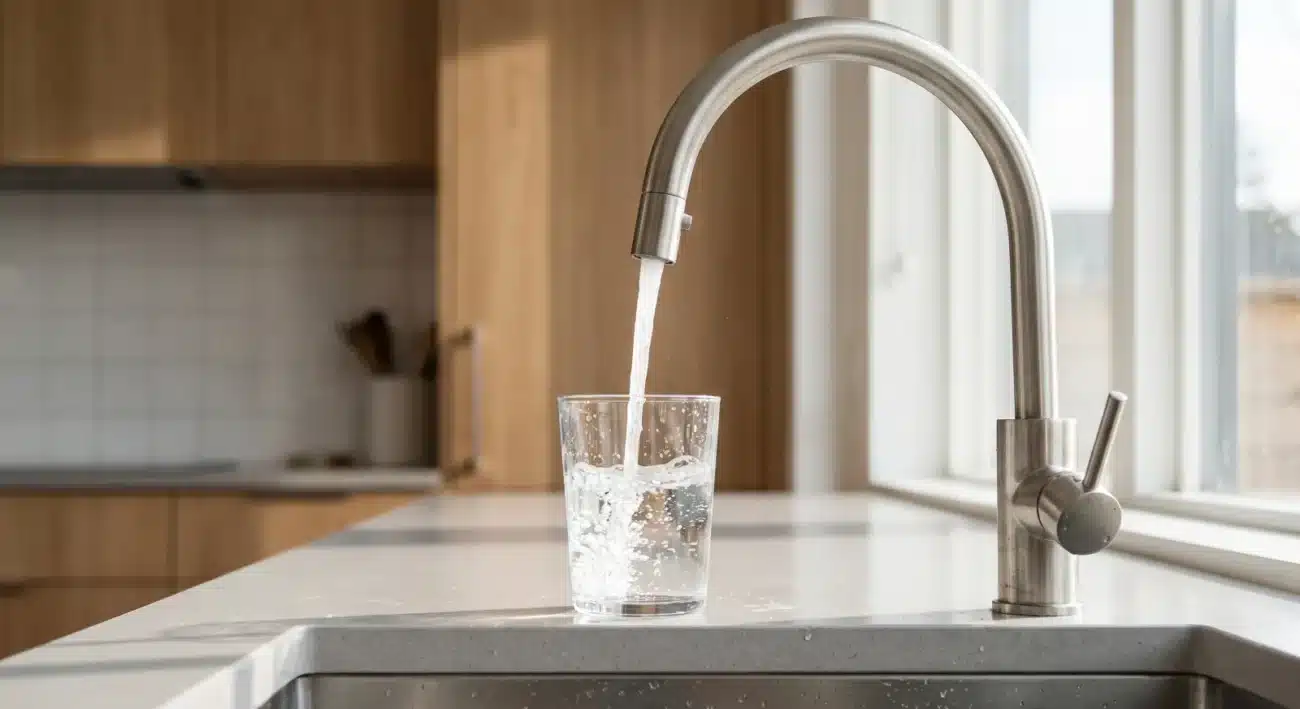
But what does this mean for the water coming out of your tap? Let's look at it in real terms and understand where a water filter comes into the equation.
Cyprus is moving towards 100% Desalinated Water
The big picture is clear. The Cypriot state plans to have the island's drinking water completely covered by desalination. As stated by the Minister of Agriculture Maria Panayiotou, with the operation of the new units "100% of the water supply needs will be covered by desalinated water", according to Cyprus Mail article.
The numbers show the magnitude of the turnaround. Three mobile desalination plants are expected to produce 77,000 cubic meters of water per day, while four more projects add at least 47,000 cubic meters per day. Permanent plants in Famagusta and eastern Limassol are expected by 2029, and the budget for the purchase of desalinated water reaches 140 million euros.
There is no shortage of criticism. Coastal engineer Xenia Loizidou described the introduction of mobile units as a hasty panic solution, arguing that infrastructure and proper water management should be prioritized. In any case, the direction is clear: tap water in Cyprus will increasingly be desalinated.
What is Desalinated Water and How Does It Get to You?
Desalination takes seawater and removes the salt, usually through reverse osmosis on an industrial scale. The result is water that is very low in salts, which is then remineralized and chlorinated to make it safe for distribution into the network.
This route has consequences for your tap. First, the chlorine from disinfection leaves the familiar taste and smell. Second, depending on the source and the mixing with borehole water, the water can reach you with different hardness from region to region. Cyprus water is generally considered hard, which is evident in the residue it leaves on your kettle and coffee maker.
Hard Water, Chlorine and Nitrates: The Cypriot Reality
Beyond desalinated water, some of the water still comes from boreholes, and there the issues are different. In rural areas, such as Kokkinochoria in the Famagusta district, intensive farming has been linked to nitrates in groundwater, while proximity to the sea also brings the issue of salinization, i.e. saltwater intrusion into the aquifer.
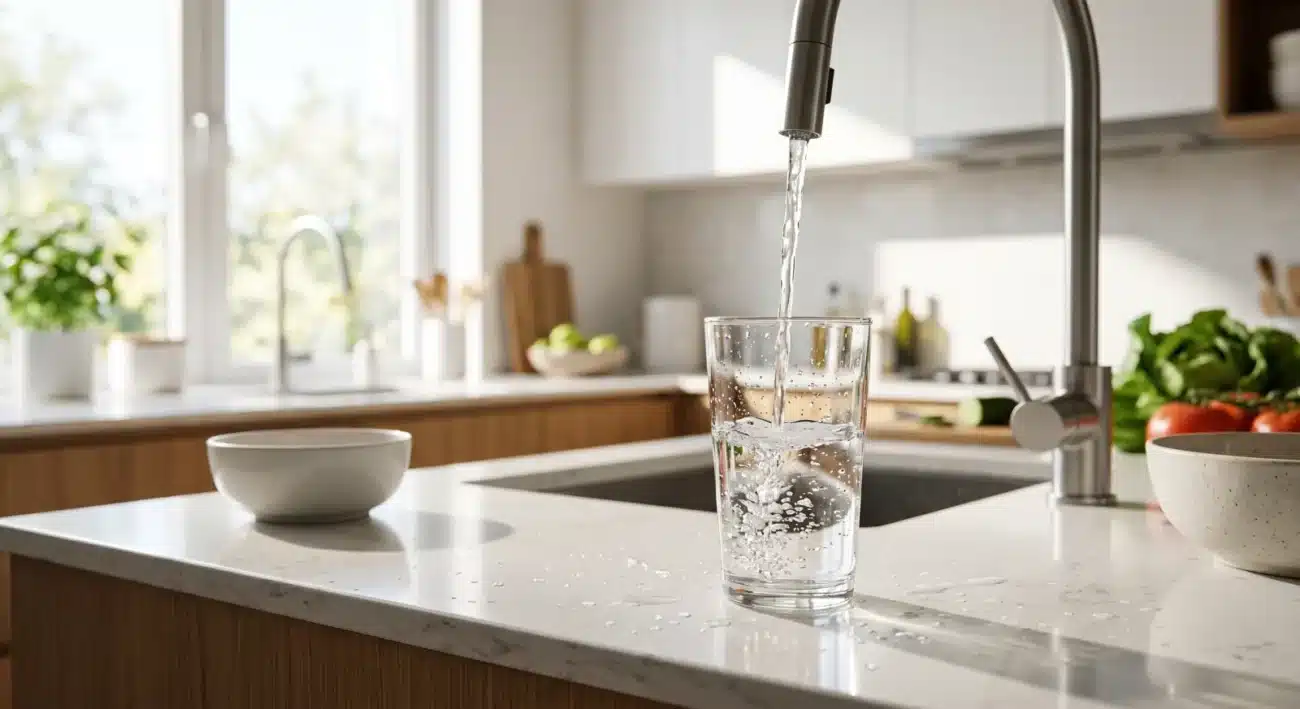
In practice, the Cypriot consumer is faced with three potential issues at the tap: chlorine and taste, hardness and salts, and in some areas nitrates or salinity. The water remains tested and safe for drinking based on the European framework of EU Directive 2020/2184, but these characteristics are the reason so many turn to bottled or filtered water.
Where Does the Water Filter Come In?
Here's the crux: different problem, different solution. If chlorine and taste are your main concerns, a countertop filter with ceramic and activated carbon does the job, removing chlorine and contaminants while retaining beneficial salts. The key Countertop filter at 77 euros It meets exactly this need and is easily placed on the faucet.
However, if you live in an area with high hardness, nitrates or brackish water, a simple carbon filter is not enough for the salts. The right solution is reverse osmosis, the same technology used by large desalination plants, on a domestic scale. If you're not sure which category suits you, the guide to choosing the right model It guides you based on the water in your area.
The Olympus Choice Plus for Cyprus
Olympus Plus is available in Cyprus with local presence and support, with an office in Nicosia. full range of filters includes Countertop series, Under the Counter and reverse osmosis, to cover both the simple need for taste and the most difficult waters.
What they all have in common is the patented antimicrobial copper (CW606N and CW508L alloy) in the inner chamber. According to the manufacturer, it neutralizes up to 95% of germs in two hours, keeping the device hygienic between uses. On an island where water has such a long journey to your tap, this stability counts.
The Conclusion on Cyprus Water
Cyprus is entering an era where tap water will be mostly desalinated, tested and safe, but with its own characteristics in taste and hardness. Whether you need a filter, and which one, depends on what exactly bothers you about your water and what area you live in.
The first step is always to know your water. From there, the right device, from a simple countertop filter to a complete reverse osmosis system, turns the problem into a solution.